

7 American-Made Bow Hunting Accessories Worth Buying
Seven american made bow accessories worth buying, compared on quality, price and warranty. Find the picks that suit your compound setup.

In this article
Quick Summary
An american made bow accessory is one whose production location is stated and verifiable for that specific item, not just the brand. Check each product's listing for where it is assembled, ask about components like webbing and buckles, and confirm a U.S. contact for warranty support. Key accessories include a carry system, quiver, stabilizer, release aid, sight and rest.
- Check origin per product, since one brand may assemble some items domestically and import others.
- Ask where webbing, buckles and cord come from, because components can be imported even when assembly is domestic.
- Confirm a U.S. address and phone line so repairs and returns are easier.
- Test a bow carry system at home before carrying it into the field on steep or brushy ground.
- The Backpack Bow Sling is listed at $29.95 at ldhoutdoors.com, and it is hand-tied in Oregon.
Table of Contents
- Why Buy American-Made Bow Hunting Accessories
- How to Verify Where Your Bow Accessories Are Made
- Compound Bow Accessories List: What Most Hunters Actually Need
- Archery Accessories List by Bow Type and Hunting Style
- Bow Sling for Compound Bow: Selection Criteria and Trade-Offs
- Best American-Made Bow Hunting Accessories Compared on Price and Warranty
- Common Mistakes When Choosing and Using a Bow Carry System
- Pick Your Next Carry Setup and Secure Your Bow Before the Hike
- Frequently Asked Questions
Backpack Bow Sling is a hand-tied bow carry from LDH Outdoors that attaches to your existing pack webbing and holds a compound bow hands-free on the trail. If you are shopping for American-made bow hunting accessories, this guide walks through how to check where gear is made, which accessory types matter most, and what to weigh before you buy from an american made bow hunting accessory maker. We hand-tie our slings in Oregon, and we will point out where the trade-offs are real.
Most of this guide is about choosing well, not chasing a list. The best accessory depends on your bow, your terrain and how you actually spend the day.
Why Buy American-Made Bow Hunting Accessories
Buying domestic gear, such as an american made bow sling, is a choice about accountability.
Domestic origin is not a guarantee of quality, though. A product can be assembled in the U.S. from imported parts, so the origin question is worth asking product by product.
How to Verify Where Your Bow Accessories Are Made
"Made in USA" on a homepage can cover the whole catalog or just one item. Check each product you're considering:
- Read the product listing. Look for a stated production location and whether it says the item is assembled or fully made in the U.S.
- Ask about components. Materials like webbing, buckles and cord may come from elsewhere even when the final assembly is domestic.
- Check the warranty and support contact. A maker with a real U.S. address and phone line is easier to reach when a part fails.
- Look for specifics. Vague wording like "American spirit" without a production detail is a weak signal.
A short email asking where a specific item is cut and sewn is a fair request, and a reputable maker will answer it directly.
Compound Bow Accessories List: What Most Hunters Actually Need
Most compound hunters do not need a shelf full of gear. The core items that earn their place in the field are a carry system, a quiver, a stabilizer, a release aid, a sight and an arrow rest.
Bow carry system. A sling or harness frees your hands on the approach and is the accessory you use every trip. Check that the attachment fits your pack's webbing or harness rather than assuming it will.
Quiver. It should hold your arrow length and broadhead size securely and quietly. Look for a rigid hood that protects broadheads, a gripper that holds shafts without rattle, and a mounting method that matches your bow's riser bushings or your pack.
Stabilizer. It improves balance and reduces hand shock, and the right length depends on your draw length and shooting style. Front bars in the 6- to 10-inch range are common for hunting setups; longer bars and rear bars are more common on target bows.
Release aid. Consistency comes from a release that fits your hand and trigger style. Index-finger, thumb-trigger and hinge releases behave differently; try before you buy if you can. Check the jaw type (caliper versus hook) and whether the release uses a wrist strap or a handheld body.
Sight and rest. Match these to your shot distance and precision needs. A single-pin slider sight suits hunters who range and dial; a multi-pin sight suits fixed-distance shooting. For rests, a drop-away rest clears the arrow faster but adds a cord and timing setup, while a full-containment rest is simpler and more forgiving in brush.
Start with the carry system and quiver, since you will use them on every hunt, then add the rest as your setup matures. For each item, verify origin per product rather than per brand: a maker may assemble one accessory domestically and import another.
Archery Accessories List by Bow Type and Hunting Style
The right accessories depend on your bow and how you hunt, and the origin question changes with each category. Organize your buying by setup first, then by terrain, then verify where each item is made.
Compound setups. Compound bows carry the widest accessory ecosystem: sights, rests, stabilizers, releases, quivers and slings all mount to standard interfaces. Most compound risers use a 5/16-24 stabilizer thread and a standard Berger-hole rest mount, so compatibility is usually a matter of matching those interfaces.
Recurve and traditional setups. Recurve and longbow hunters usually need less accessory hardware and more attention to arrow tune and string care. A bow stringer, a bow square for nocking-point placement, and a quality arrow rest or rug rest are the core items. Stabilizers are less common but can help balance a heavy riser.
Mountain and backcountry hunters. Lightweight carry solutions and secure quivers that will not rattle on rough ground matter most. A hands-free sling that attaches to pack webbing lets you scramble with both hands free.
Treestand and blind hunters. Quiet, compact quivers and a stabilizer that does not snag in tight spaces are priorities. A detachable quiver lets you leave arrows at the stand. A shorter front bar reduces snag risk.
Target-focused shooters. Sights, rests and release tuning matter more than carry gear. A longer stabilizer with rear bars, a precision rest and a hinge or thumb-trigger release are common. Origin verification still applies: target accessories are often assembled domestically from imported components, so ask about the specific parts.
If you switch between styles, pick accessories that work across both rather than buying a separate kit for each. A sling that fits multiple packs and a quiver that mounts both on the bow and on a pack cover more ground than two single-purpose items.
Bow Sling for Compound Bow: Selection Criteria and Trade-Offs
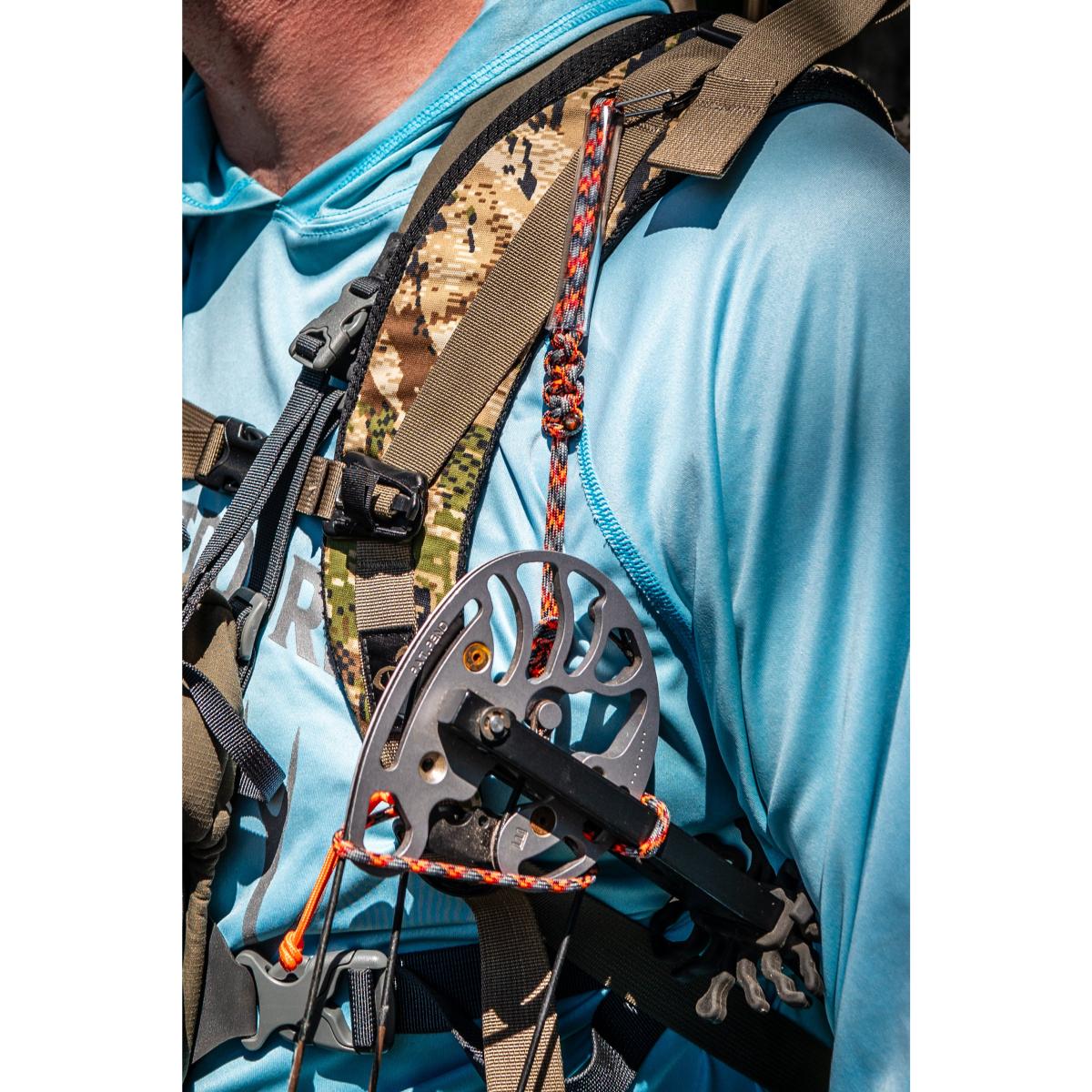
A bow sling attaches to your backpack or binocular harness and holds the bow while your hands are free. Our Backpack Bow Sling is designed to attach to most backpacks and most compound bows. It retails for $29.95.
Key criteria when comparing slings:

- Compatibility with your bow. Check the cam and limb design so the sling seats properly.
- Attachment method. Confirm it fits your pack's webbing or harness.
- Ease of release. You should be able to drop the bow quickly if you need to shoot.
- Weight. Every ounce adds up on a long hike.
Our sling is hand-tied and attaches by pulling the sling under the limb and over the cam, so the bow's weight cinches it. See the Backpack Bow Sling for its specs and attachment details. Because it depends on correct setup, inspect it before each trip.
Hands-Free Carry on Steep and Brushy Terrain
On steep, brushy ground, your bow needs to stay put while you scramble. Set the sling so the bow hangs vertically and the sling cinches tight under its own weight. For a full walkthrough, see how to carry a compound bow on an Exo Mountain Gear pack. Before you start, test it by lifting and shaking the bow gently. If it shifts, reposition the sling before you climb.
Brush can snag the bow and loosen the setup, so check the sling at every stop, not just at the trailhead.
Release Speed, Knot Security and Fit
A carry system has to release quickly when you need to shoot and hold securely when you don't. For our sling, lifting the bow's weight off the sling and pulling the release cord frees it. Practice this at home before you rely on it in the field.
Hand-tied knots are strong when they are tied and inspected correctly, but they need periodic checks for wear. Learn whether hand-tied bow slings hold up over time before you buy. Compare how quick release bow carry systems perform in practice on release speed and knot security. Fit matters too: the sling should sit comfortably against your pack without pulling the bow into your legs or hip. If you need a fit-focused option, see bow slings designed for women hunters.
Best American-Made Bow Hunting Accessories Compared on Price and Warranty
Prices change, so verify current details on each maker's site before you buy. The Backpack Bow Sling is listed at $29.95 at ldhoutdoors.com.
When comparing options across makers, put them side by side on the same points:
| Factor | What to check |
|---|---|
| Price (USD) | Compare the full cost, including any required attachments |
| Made in USA | Confirm per product, not per brand |
| Warranty | Read the actual terms and coverage period |
| Compatibility | Match to your bow model and pack |
| Support | Confirm a U.S. contact for returns or repairs |
A low price is not a bargain if the item doesn't fit your bow or can't be repaired.
Common Mistakes When Choosing and Using a Bow Carry System
- Skipping the test run. Set up the sling at home and carry the bow for a few minutes before any hunt.
- Ignoring pack compatibility. A sling that works on one pack may sit awkwardly on another.
- Failing to inspect. Check straps, knots and attachment points before every trip, as the product guidance recommends.
- Overloading the setup. Do not rely on a carry system beyond its intended use or modify it.
- Assuming it's foolproof. No carrying system guarantees your bow stays secure in every condition. Stay aware of your bow while moving, especially on uneven ground.
Watch out: a bow that slips during a scramble can damage the bow, optics or other gear. Always verify the attachment before you climb.
Pick Your Next Carry Setup and Secure Your Bow Before the Hike
Start with the accessories you'll use on every trip, check where each item is made, and compare price and warranty on the same terms. If you hunt steep or brushy country and want your hands free on the approach, our Backpack Bow Sling is a simple place to start at $29.95. Shop now at ldhoutdoors.com, and test the setup at home before you carry it into the field.
Frequently Asked Questions
What bow brands are made in the USA?
Several bow makers produce compound and traditional bows in the United States, but availability and build locations change, so confirm country of origin on each manufacturer's product page or by contacting its customer service before you buy. Look for explicit statements about where the bow is assembled, not just where the company is headquartered. A brand can be American-owned while producing parts overseas. Verifying this for each product gives you a more reliable answer than any general list, which can go out of date quickly.
Which bow hunting accessories are made in the USA?
Origin varies by individual accessory, even within one brand. A sight, a rest, a quiver and a sling may each be made in different places, so check each item separately. The LDH Outdoors Backpack Bow Sling is hand tied in Oregon and is priced at $29.95. For other accessories, ask the seller where the specific item is manufactured and whether that answer is printed on the packaging or in the product listing.
What should you look for in a bow sling?
Start with compatibility: confirm the sling attaches to your backpack or bino harness webbing and works with your bow's cams and limbs. Next, check how it releases, since you should be able to free the bow quickly with cold hands. Inspect stitching and connection points before each use. Finally, review the warranty and return policy, because a sling you have never handled in person carries more risk than a familiar one.
What accessories do you need for a compound bow?
Most hunters need a sight, an arrow rest, a quiver, a stabilizer and a carry system such as a sling or harness. A release aid and a bow case are common additions for transport and shooting consistency. Match each accessory to your bow's axle-to-axle length, draw length and mounting holes, and confirm compatibility before buying. Prioritize the items that affect accuracy and safe carry first, then add comfort and convenience accessories as your budget allows.


