

How to Hunt Deer From Ground Level Without a Blind?
Learn how to hunt deer from ground level with a step-by-step setup, wind and scent control, shot distance tips, and a field checklist for bow or rifle.

In this article
Last Updated: November 4, 2026
Quick Summary
Ground-level deer hunting means sitting or kneeling on the forest floor with no tree stand or ground blind between you and the deer, using natural cover, shadows and careful wind checks to stay hidden. The key to success is choosing a spot along deer travel routes, not inside bedding areas. Your spot matters more than your gear.
- Pick a spot on a travel route with fresh tracks, droppings or rubs rather than inside a bedding area.
- Aim for a clear shooting lane of about 25 to 35 yards.
- Check wind at ground level with a powder bottle, since it can differ from wind higher up.
- Sit high on slopes in the morning and low in the evening to account for thermals.
- Stay still, because deer pick up movement faster than shape.
Table of Contents
- Why Ground-Level Deer Hunting Works and Where It Falls Short
- Choosing a Ground-Level Spot: Reading Deer Sign, Travel Routes and Bedding Areas
- Using Natural Cover, Shadows and Wind to Stay Hidden
- Bow Hunting Deer From the Ground Without a Blind
- Deer Hunting From the Ground With a Rifle: Backstops and Shot Limits
- Ground Blind Deer Hunting Setup: A Field Checklist for Your Gear
- Next Step: Plan Your First Ground-Level Hunt With a Sling-Ready Bow
- Frequently Asked Questions
Why Ground-Level Deer Hunting Works and Where It Falls Short
Ground-level deer hunting means sitting or kneeling on the forest floor with no tree stand or ground blind between you and the deer. This is one of the oldest ways to hunt whitetail. It works because deer often look up more than they look around, and a hunter who stays low can blend into brush, logs and shadows.
The trade-off is real. Your eyes sit close to the deer's eye level, so your movement, scent and outline are easier to spot. You also lose the height advantage that lets you see down into feeding areas. This guide covers how to make ground-level hunting work, from choosing the spot to setting up your gear.
Pros of ground-level hunting:
- No tree stand to hang, climb or carry
- Easy to move between spots on foot
- Quiet setup with no stand creaking or pulling
- Works well on public land where stands may be off-limits
Cons to plan for:
- Deer spot you more easily at eye level
- Shot angles can be harder to control
- Wind and scent matter more when you are low to the ground
- Limited visibility through thick brush
Choosing a Ground-Level Spot: Reading Deer Sign, Travel Routes and Bedding Areas
Your spot matters more than your gear. Start by walking the area and looking for deer sign: tracks in soft soil, rubs on saplings, scrapes under low branches and droppings along trails. Fresh sign tells you where deer have been recently.
Look for the lines between bedding areas and feeding areas. Deer usually follow the same travel routes, often through the thickest cover they can find. A small gap in a fence line, a creek crossing or a saddle between two ridges can funnel deer past you.
Quick checklist for picking a spot:
- Fresh tracks or droppings on a trail or travel route
- A bedding area within a short walk, such as a thick patch of cover on a slope
- Natural cover behind you and to the sides
- A clear shooting lane of about 25 to 35 yards
- A spot where the wind will blow your scent away from the deer's approach
Watch out: Scouting a bedding area and then walking through it can push deer off the property for days. For a lighter alternative to bulky tree-stand or mountain carry setups when moving through terrain, see Bow Spider Alternative for Mountain Hunting. Stay out of the bedding zone and hunt the edges and travel routes instead.
Using Natural Cover, Shadows and Wind to Stay Hidden
Once you have a spot, use what nature gives you. Sit with a log, a root ball or a thick brush line behind you. Stay in the shadows of trees, and avoid sitting in open sunlight where your outline will stand out.
Wind is the most important factor, and most ground-level failures trace back to it. Deer have a sense of smell far better than yours, so always check the wind before you set up.
Thermals are the part most hunters miss. On a normal day, air warms and rises after sunrise, so your scent lifts up slopes and away from deer below you. In the evening, air cools and sinks, so your scent drains downhill into low ground and creek bottoms.
Swirling wind is the other common failure. In rolling terrain, around points, and where timber meets open ground, air eddies and changes direction minute to minute. A powder bottle shows you the swirl in real time.
Stay still. Deer pick up movement faster than shape. Set up before the deer arrive, and move only when they are looking the other way.
Watch out: a common mistake is sitting in the right place with the wrong wind. Check the wind every time you sit down, not just once at the start of the day, and re-check it whenever the sun changes angle or a front moves through.
Bow Hunting Deer From the Ground Without a Blind
Bow hunting from the ground asks more of you than rifle hunting. Your effective range is shorter, usually around 25 to 35 yards, and you have to draw without being seen. Set up with a shot lane cleared of low branches so you can draw smoothly.
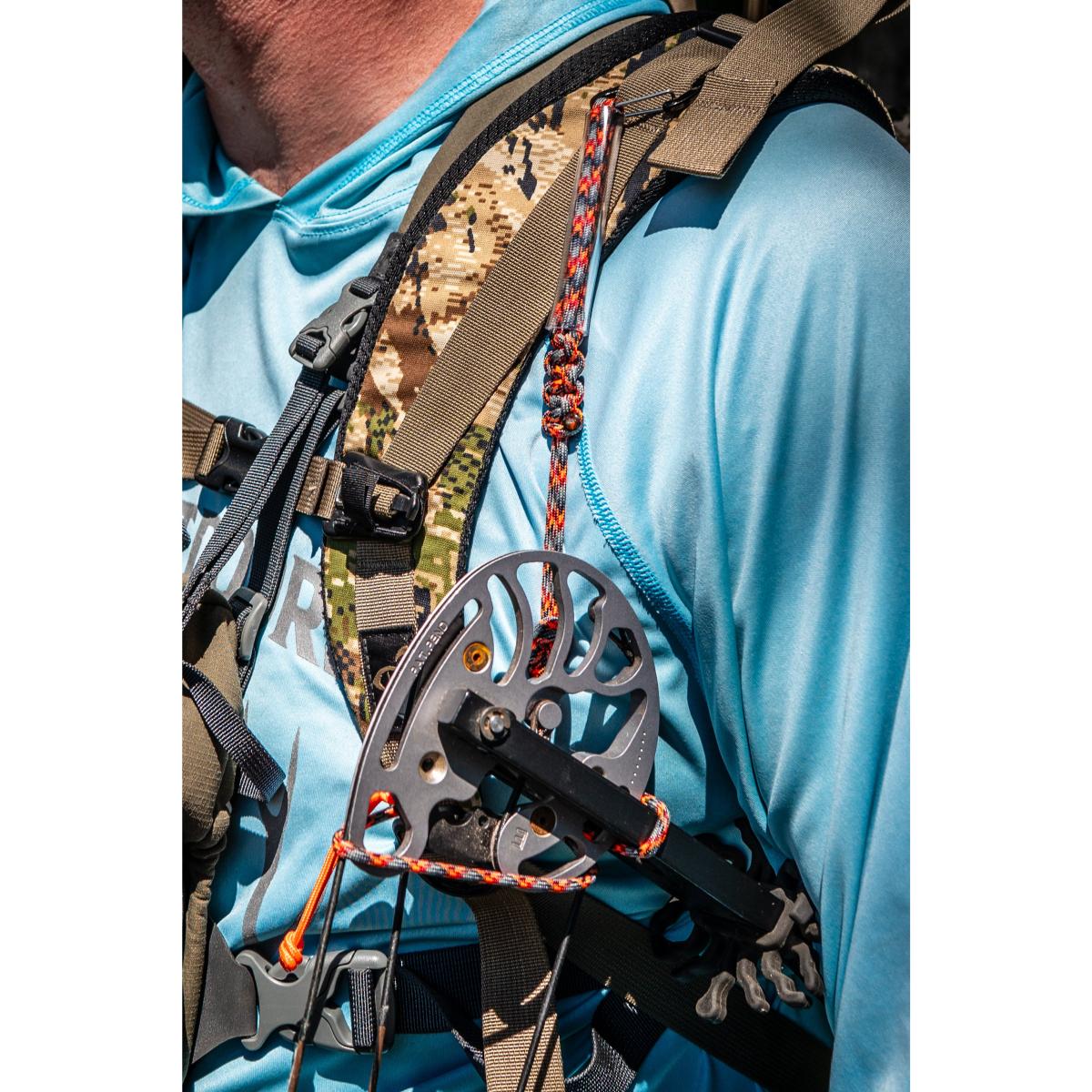
Holding a drawn bow while you wait is hard on the arms and shoulders. Practice holding at full draw for longer than you expect to need. Keep your draw slow, and wait for the deer to turn its head away before you move.

A backpack bow sling helps here. Our Backpack Bow Sling lets you carry your compound bow hands-free while you walk in. It attaches to most backpacks and most compound bows. Hang the bow, pull the sling under the limb, pull it over the cam with the release cord pointed back toward you, and let the weight of the bow cinch it tight.
Shot placement matters too. Stay within your effective range, and only take ethical shots. If the shot is poor, wait and let the deer move on rather than forcing a bad release.
Deer Hunting From the Ground With a Rifle: Backstops and Shot Limits
Rifle hunting from the ground gives you more range, but it also brings more safety responsibility. Before you shoot, know what is behind the deer. A safe backstop, such as a hill or a thick earth bank, keeps your bullet from traveling past the target into roads, homes or other people.
Set your shot limit before the deer appears. Many hunters choose a distance they can shoot accurately from a sitting or kneeling position, and stay inside it. Use a solid rest, such as a shooting stick or your pack, to steady your rifle.
Always confirm your target and what lies beyond it. Know the rules for your hunting area, and check the regulations that apply to firearm use from the ground in your state. Public land often has its own access and setup rules, so read them before you go.
Ground Blind Deer Hunting Setup: A Field Checklist for Your Gear
Even without a blind, a good setup starts with the right gear packed the right way and a repeatable order of operations. The checklist below covers both a pop-up ground blind and a blindless sit, so you can run the same sequence whether you are tucked behind a brush pile or inside a fabric hub blind.
Before you leave the truck:
- Bow or rifle, checked and sighted in
- Backpack bow sling attached to your pack or bino harness
- Lightweight folding seat or cushion for low sitting
- Pruning shears and a folding saw to clear shooting lanes
- Wind indicator or powder bottle
- Camouflage that breaks up your outline, plus a face mask or net
- Scent control clothing stored in a sealed bag
- Water, snacks and a rain layer
- Phone with a charged battery and offline maps
- First aid kit and a headlamp with spare batteries
Blind-specific additions:
- Ground blind with stakes and tie-downs
- Black interior layer or dark shirt to kill silhouette inside the blind
- Shooting rest or tripod sized for seated height
- Brush or natural material to brush in the blind's outline
Field sequence, in order:
- Approach from the downwind side and stop short of your setup so you do not spook deer already feeding.
- Set the blind or seat first, then brush it in with local material so it matches the surroundings.
- Clear your shooting lane quietly with shears and a folding saw, cutting at ground level and leaving tall stubble rather than flat stumps.
- Range the near and far edges of your lane and note them so you do not have to move a rangefinder when a deer appears.
- Sit down, check the wind with powder, and confirm your draw or mount path is clear of branches.
- Settle in and stay still until legal shooting light.
Blind versus no blind: a pop-up blind hides movement and lets you get away with a little more shifting, but it is one more thing to carry and it can look out of place if it is not brushed in. A blindless sit is lighter and quieter to set up, but it demands stricter stillness and a better natural backdrop. On public land, check the rules before you leave a blind unattended or stake anything into the ground, and pack out every stake, cord and wrapper so your setup leaves no trace.
Expected result: you should be able to draw, shoot or hold your position without shifting your body or making noise, and you should be able to leave the site without leaving gear or fresh sign behind.
Here is a quick summary of the gear and blind-versus-blindless trade-offs covered in the setup checklist.
| Setup | Best for | Key difference |
|---|---|---|
| Pop-up ground blind | Hiding movement | One more item to carry; must be brushed in |
| Blindless sit | Light, quiet setup | Demands stricter stillness and natural backdrop |
| Backpack bow sling | Hands-free bow carry | Attaches to most packs and compound bows |
Next Step: Plan Your First Ground-Level Hunt With a Sling-Ready Bow
Ground-level hunting rewards preparation. Scout your spot, check the wind, clear your lane and keep your movement small. A sling-ready setup lets you walk in with your bow secured and your hands free, then get into position quickly.
When you are ready, browse the Backpack Bow Sling from LDH Outdoors. It is $29.95, hand-tied in Oregon, and designed to be a simple way to carry your compound bow. Shop now and get your sling ready before your next hunt.
Frequently Asked Questions
What is the best way to hunt deer from the ground?
Pick a spot near a travel route or feeding area where you can see several shooting lanes, and sit or kneel against natural cover such as a log, brush or a tree trunk. Keep your silhouette broken, stay downwind of where deer will approach, and set up before first light so you are not moving while deer are close. Plan shots in the 25 to 35 yard range for bow hunting, and confirm a safe backstop before any rifle shot.
How do you hunt deer from the ground without a blind?
Use natural cover to break up your outline, such as thick brush, a large tree, or a fallen log, and sit low so your head stays below the top of the vegetation. Position yourself so the wind blows from deer toward you, and clear only the few branches that would block your shot. A lightweight chair or cushion helps you stay still for long periods, and a compound bow carried on a hands-free sling keeps your hands free while you walk in.
How do you stay concealed when ground hunting deer?
Break up your outline with cover, keep movement slow and deliberate, and avoid crunchy leaves by walking on soft ground or stepping over debris. Check wind direction before you settle in and again as temperatures change in the morning and evening, because thermals can shift scent. Wear full camouflage, keep your face covered, and stay still when deer are in view, since deer detect motion faster than shape.
How important is wind direction when hunting deer from the ground?
Wind direction is critical because deer rely heavily on smell. Set up so the prevailing wind carries your scent away from the route deer will use, and reassess when the wind shifts or thermals change across the day. Using a wind indicator such as a small powder or thin feather at your location lets you confirm conditions before deer arrive. If the wind is unreliable, consider moving rather than hunting a spot where your scent could reach deer.


