

How Do You Build a Modular Hunting Layering System?
Build a modular hunting layering system with base, mid, and shell layers for any weather. Compare fabrics and fit your kit to stay warm and mobile.

In this article
Last Updated: November 4, 2026
Quick Summary
Build a modular hunting layering system by combining three separate layers: a moisture-managing base layer, an insulating mid layer, and a weather-blocking shell. Choose each piece for your activity level and terrain so you can add or shed layers as conditions shift, rather than relying on one heavy jacket.
- Skip cotton base layers entirely because cotton holds moisture and chills you once you slow down.
- Two thinner mid layers beat one bulky jacket by packing smaller and drying faster.
- A waterproof hardshell needs pit zips and a deep front zip to vent sweat on climbs.
- Match shell choice to terrain: softshell for dry windy ridges, hardshell for wet coastal hunts.
- Merino wool resists odor naturally, making it strong for multi-day backcountry hunts.
Table of Contents
- Why a Modular Hunting Layering System Beats One Heavy Jacket
- The Three Layers: Base, Mid, and Shell Functions Explained
- Step 1: Pick Your Base Layer for Moisture Management
- Step 2: The Best Hunting Base Layers for Cold Weather
- Step 3: How to Choose Hunting Mid-Layers That Regulate Heat
- Step 4: Match Your Shell Layer to Weather and Terrain
- Scent Control, Camouflage, and Quiet Fabrics in a Layering System
- Packability, Weight, and Modular Combinations for the Backcountry
- Frequently Asked Questions
Why a Modular Hunting Layering System Beats One Heavy Jacket
A modular hunting layering system is a set of separate garments, base, mid, and shell, worn together or apart so you can regulate heat as conditions shift.
Here's the core problem with one heavy jacket.
Below, we'll show you exactly how to build that system piece by piece, from base to shell, so it works for your terrain, your activity level, and your season.
The Three Layers: Base, Mid, and Shell Functions Explained
Every modular hunting layering system rests on three layers, and each one does a distinct job. Get the functions clear and the shopping gets simple.
- Base layer: Sits against your skin. Its job is moisture management, moving sweat away so you stay dry and warm.
- Mid layer: Traps warmth and provides insulation. This is your temperature regulation layer, added or removed as you heat up or cool down.
- Shell layer: Blocks wind, rain, and snow. It's your weather protection, worn over everything when conditions turn.
Think of it as a system, not three random garments. The base manages moisture, the mid holds heat, and the shell keeps the weather out. Change one piece and you change how the whole system performs.
Step 1: Pick Your Base Layer for Moisture Management
Start with the layer touching your skin, because a wet base layer defeats everything above it. Look for a close fit that wicks sweat and dries fast, in either merino wool or a synthetic fabric.
Fit matters more than most hunters realize. A base layer should sit snug against the body so it can pull moisture away, but not so tight it restricts mobility when you draw your bow.
Merino Wool vs Synthetic Hunting Clothes: Which Base Wins?
Merino wool and synthetic fabrics each handle moisture differently, and the right pick depends on your hunt. Merino wool is soft, resists odor naturally, and regulates temperature across a wide range, which helps on multi-day backcountry trips where scent control matters.
Here's how they compare on the factors that matter in the field:
| Factor | Merino Wool | Synthetic Fabric |
|---|---|---|
| Moisture handling | Absorbs and buffers sweat | Wicks and dries fast |
| Odor resistance | Naturally odor-resistant | Holds odor over time |
| Durability | Good, can pill with wear | High, resists abrasion |
| Best for | Multi-day hunts, scent control | High-sweat, fast-moving hunts |
For cold-weather stand hunting and multi-day trips, merino wool is a strong choice. For aggressive spot-and-stalk in warmer weather, synthetic dries faster. Many hunters keep one of each and swap by season.
Step 2: The Best Hunting Base Layers for Cold Weather
For cold weather, the best hunting base layers for cold weather balance warmth with moisture management, using a midweight merino or synthetic fabric that fits snug and dries fast.
What most guides miss is that cold-weather base layers should be chosen for your activity level, not the thermometer alone.
If you're weighing specific cold-weather pieces against the brands you already know, our breakdown of Sitka Gear alternatives for hunters gives you concrete options to compare for your base and mid layers.
Step 3: How to Choose Hunting Mid-Layers That Regulate Heat
How to choose hunting mid-layers comes down to two questions: how much heat you need to trap, and how fast you can dump it when you start moving. Answer those and the shopping list narrows itself. The mistake most hunters make is buying one heavy mid layer instead of two lighter ones, which locks them into a single temperature window all day.
Start by mapping your hunt to an activity profile. A stand hunter who sits for hours in cold needs more trapped warmth per ounce. A spot-and-stalker covering miles generates heat continuously and needs a mid layer that breathes and comes off fast.
Insulation types and what they're actually good at
- Fleece (grid fleece and brushed fleece): Breathable, quiet, and fast-drying. Best warmth-to-weight for active hunts and mild cold. Grid fleece moves moisture well under a pack; brushed fleece is quieter but heavier for the warmth.
- Synthetic insulation (continuous-filament and sheet synthetics): Keeps insulating when damp, which matters in wet, unpredictable weather and on multi-day hunts where gear never fully dries. Heavier and bulkier per unit of warmth than down.
- Down insulation: The best warmth-to-weight ratio and the most packable option, but it loses loft and insulating value when wet. Pair it with a waterproof shell or choose a water-resistant treated down for wet climates.
Match mid-layer weight to activity, not just temperature
A practical pattern many hunters follow is to size the mid layer to output, then let the shell handle weather:
- High-output climbing and spot-and-stalk: A light grid fleece or thin synthetic vest as the only mid. You'll be warm within minutes of moving; anything heavier becomes a sweat trap.
- Mixed sit-and-move hunts: A midweight fleece or light synthetic jacket you can shed at the base of the climb and pull back on at the glassing point.
- Cold stand hunting: A heavier synthetic or down mid plus a lighter fleece underneath, so you can fine-tune between the two as the sun moves.
Two thinner mids beat one bulky jacket every time: they pack smaller, dry faster, and give you more temperature steps between "all on" and "all off."
Features that matter on a hunting mid layer
- Full-length or deep front zip: The fastest way to dump heat without removing the layer.
- Pit zips or side vents: Useful on active hunts under a pack.
- Quiet face fabric: Brushed or matte finishes reduce the swish that spooks close game.
Watch out: a mid layer sized to your coldest sit will overheat you on every climb. If you can only buy one, buy for the climb and add a packable puffy for the sit.
Step 4: Match Your Shell Layer to Weather and Terrain
Your shell decides whether the whole system holds up when the weather turns, and it's the layer where the wrong choice hurts most.
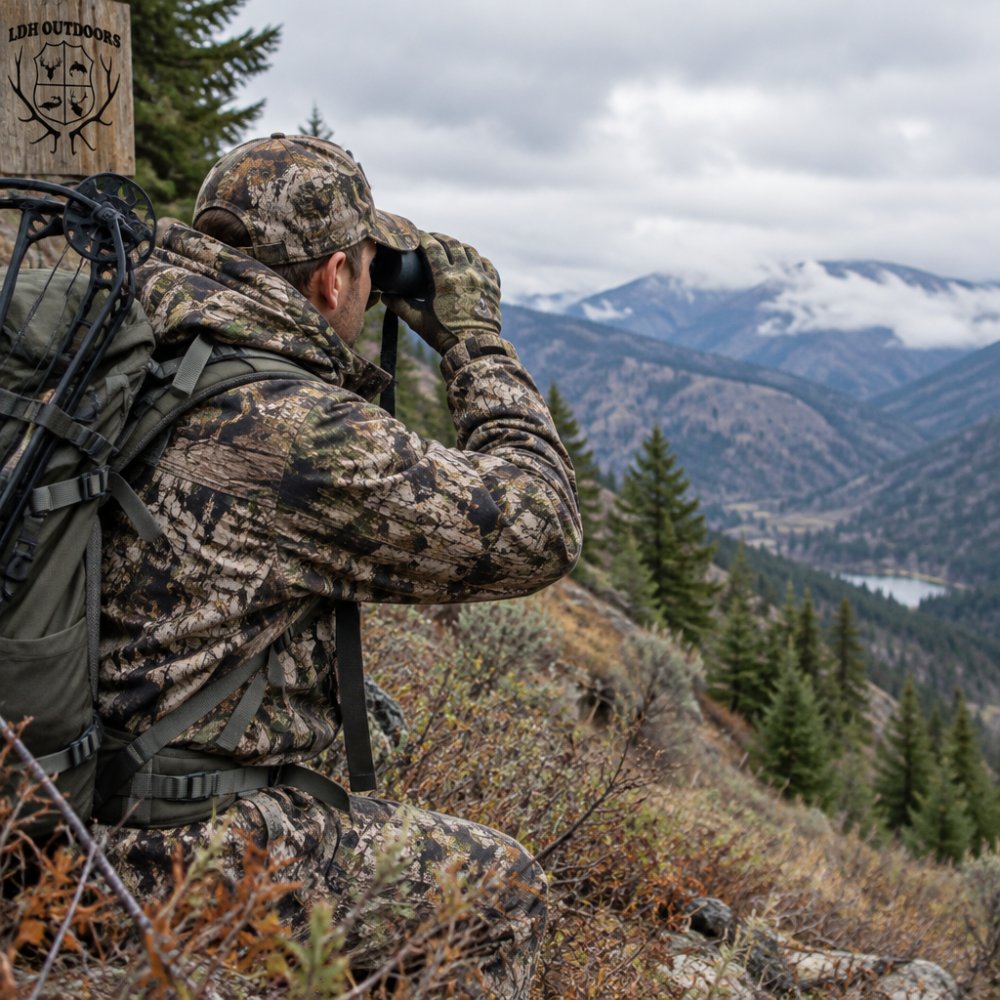
Three shell types and when each earns its place
- Waterproof, breathable hardshell: For sustained rain and wet snow. Look for fully taped seams, a storm flap over the main zip, and adjustable cuffs and hem. Breathability is the trade-off: the more waterproof the fabric, the harder it works to vent sweat, so pit zips and a deep front zip matter.
- Windproof softshell: For dry, windy ridges and active hunts. Softer, quieter, and far more breathable than a hardshell, but it will wet out in steady rain. This is the best all-around shell for spot-and-stalk in dry climates.
- Packable emergency shell: A lightweight waterproof layer that lives in the pack for storms that roll in fast. It won't breathe like a dedicated hardshell, but it buys you protection when you didn't plan to need it.
Match the shell to terrain and weather pattern
- Steep, exposed country: Prioritize wind resistance and breathability. A softshell with a hood that fits over a helmet or cap handles most dry days; carry a packable hardshell for the afternoon storm.
- Wet, coastal, or low-elevation hunts: A hardshell with taped seams and good venting is the default. Expect to manage sweat on climbs with pit zips rather than by removing the shell.
- Cold, dry, high-country hunts: A windproof softshell over your insulation blocks the wind that strips heat, without the sweat penalty of a full hardshell.
Shell features worth checking before you buy
- Fully taped seams, the difference between waterproof and water-resistant.
- Pit zips and a two-way front zip, your primary sweat-management tools on the climb.
- Adjustable, helmet-compatible hood, must cinch down without blocking peripheral vision.
For a deeper look at layering for steep, exposed ground, our guide to gear for steep terrain hunting covers the broader setup.
Watch out: a fully waterproof shell with poor breathability turns into a sweat trap on hard climbs, leaving you wet from the inside. Check for pit zips and breathable fabric before you commit, and plan to vent rather than remove on the move.
Scent Control, Camouflage, and Quiet Fabrics in a Layering System
Scent control, camouflage, and quiet fabrics turn a functional layering system into a hunting system. Merino's natural odor resistance helps on multi-day hunts, while camouflage patterns should match your terrain and season.
The thing nobody tells you about camouflage is that pattern matters less than breaking up your outline and staying still. Choose a pattern that blends with your ground, then focus on quiet materials and scent management.
Packability, Weight, and Modular Combinations for the Backcountry
Backcountry hunting rewards packability and low weight, so build your modular combinations around pieces that compress small and layer together cleanly.
Weighing whether lighter layering is genuinely worth it? Our look at whether lightweight gear for elk hunting is worth it digs into the tradeoffs. Once your layers are modular, the next step is packing them well, and our guide on how to organize a hunting backpack shows you how to arrange them for fast access.
A modular system also means your hands stay free for the important work. That's where our Backpack Bow Sling fits in: it attaches to your existing pack and carries your compound bow hands-free, so layering up or down mid-hunt never means juggling your bow.
Frequently Asked Questions
What are the three main layers in a hunting system?
A modular hunting layering system has three parts. The base layer sits against your skin and moves moisture away so you stay dry. The mid layer traps warmth and is the piece you add or remove most often. The shell layer blocks wind and rain while letting sweat vapor escape. Each layer has one job, and you combine them based on temperature, wind, precipitation, and how hard you will be moving that day.
Is merino wool better than synthetic for hunting base layers?
It depends on your hunt. Merino wool vs synthetic hunting clothes comes down to tradeoffs. Merino resists odor naturally, which matters on multi-day trips and for scent control, and it feels warm even when damp. Synthetics dry faster, cost less, and hold up better under heavy abrasion. Many hunters run synthetic for early-season spot-and-stalk and merino for cold-weather stand hunting. Carrying one of each gives you flexibility across a season.
How do you prevent overheating while hiking with a heavy pack?
Start cold and vent early. Leave your mid layer in your pack for the climb and put the shell on only when wind or rain demands it. Open pit zips and front zippers before you start sweating, not after. When you stop to glass or set up, add insulation right away so you do not chill. A modular hunting layering system lets you adjust in seconds instead of committing to one heavy jacket for the whole day.
What should I look for in best hunting base layers for cold weather?
Look for a snug fit that stays close to the skin, flat seams that do not rub under pack straps, and a fabric weight matched to your activity. Lightweight merino or synthetic works for active climbs, while midweight versions suit cold stand hunting. Avoid cotton entirely because it holds moisture and cools you down. Bring two base layers on multi-day trips so you always have a dry one to change into at camp.
Building a layering system that actually works in the field takes more than buying three jackets. It takes pieces designed by people who hunt the same terrain you do. At LDH Outdoors, our hand-tied Backpack Bow Sling keeps your bow secure and hands-free through every layer change, and our locally made gear is built for real conditions. Browse our hunting collection and shop now to start building your system.


