

How to Choose an Alpine Products vs Bow Spider Carry System
Alpine Products vs Bow Spider compared on compatibility, attachment, carry comfort and price. Find out which bow carry system fits your backpack and hunt.

In this article
Last Updated: October 30, 2026
Quick Summary
The alpine products vs bow spider choice depends on the job: Bow Spider's Alpine Bow Slicker protects limbs and finish during transport, while Alpine Products carry systems hold the bow hands-free on a pack during the hike. Match axle-to-axle length and attachment points to your bow and pack first.
- Bow Spider's Alpine Bow Slicker is built for protecting limbs and finish, not for hands-free hiking.
- Bow Spider's Alpine Bow Slicker is listed for parallel-limb compound bows, 24 to 36 inches axle-to-axle.
- Measure your bow's axle-to-axle length and photograph your pack's attachment points before shopping.
- Retention matters most: test the system with your bow loaded on the steepest sidehill you can find.
- Practice the one-hand release with hunting gloves on in low light until it becomes automatic.
Table of Contents
- Why Bow Carry Systems Matter on Rugged Hunts
- How Alpine Products and Bow Spider Differ at a Glance
- Bow Holder Backpack Compatibility: What to Check First
- Backpack Bow Holder Comparison: Attachment, Retention and Release
- How to Carry a Bow While Hiking Without Fatigue
- Price, Durability and Where Each System Fits Your Hunt
- Choosing Your Bow Sling Before Your Next Backcountry Trip
- Frequently Asked Questions
Why Bow Carry Systems Matter on Rugged Hunts
When it comes to carrying a bow, the alpine products vs bow spider comparison matters more than most hunters realize, because both brands make accessories that keep a compound bow out of your hands on a long hike. Shouldering a bow for ten miles of steep, brushy country wears down your arms, your grip and your focus before you ever reach the glassing spot. At LDH Outdoors, we build the Backpack Bow Sling around that problem: carry the bow hands-free so you can keep your hands for trekking poles, rangefinders and the shot. This guide compares the Alpine Products vs Bow Spider carry system options so you can decide which one fits your pack, your bow and your terrain.
Hands-free carry is only useful if the bow stays put when you scramble uphill. A sling that shifts on every step turns a helpful accessory into a constant distraction. So the real question is not which product sounds better on paper. It is which system holds your specific bow, on your specific pack, through the conditions you actually hunt in.
How Alpine Products and Bow Spider Differ at a Glance
The names sound similar, but these are two different jobs. Before you compare stitching or camo patterns, decide which job you actually need done.
| Factor | Bow Spider Alpine Bow Slicker | Alpine Products carry systems |
|---|---|---|
| Primary function | Protects limbs and finish while the bow rides in a case, pack or vehicle | Holds the bow hands-free on a pack or harness during the hike |
| Stated bow fit | Parallel-limb compound bows, 24 to 36 in axle-to-axle | Varies by model; confirm limb style and axle-to-axle range on the current spec sheet |
| Attachment method | Depends on the model and how the bow is carried | Pack webbing, harness straps or belt-mounted hardware, depending on model |
| Retention approach | Cradles and protects the limbs | Clamps or cradles the bow at the grip or limbs to limit swing |
| Release | Not a quick-release draw system | Designed for one-hand release in most models; confirm on the current design |
| Published price | Listings cite $65.95 (Rack Camp, 2022) and $79.95 (Hunting Wire, 2023) | Varies by model and retailer; confirm current pricing |
| Best fit | Hunters who transport the bow in a vehicle or pack and want finish protection | Hunters who hike miles and want the bow out of their hands |
Two specs decide most of this: axle-to-axle length and attachment method. Check both against your bow and your pack. If your pack has no accessible webbing, a carry system is the wrong first purchase no matter how good the reviews are.
Price is the last filter, not the first. Confirm current pricing with each manufacturer or retailer before you buy. Compare total cost only after you have confirmed that the product fits your bow and your pack.
Bow Holder Backpack Compatibility: What to Check First
Before you compare features, confirm the fundamentals. Measure your bow's axle-to-axle length and confirm its limb style, then check what your pack offers for attachment. Compatibility problems are the most common reason hunters return carry gear.
Bow Limb Width and Axle-to-Axle Fit
Start with the numbers printed in the manufacturer specifications. Match the spec to your bow, and do not assume that a wider or narrower bow will simply work because it looks close.
Pack Webbing, Bino Harness and Smaller Frames
Carry systems live or die on attachment points. Our sling attaches to existing backpack or bino-harness webbing, which works well if your pack has accessible straps. Smaller frames and narrower shoulder designs can change how the bow sits against your back, so test the fit with your bow loaded before a trip. Hunters who are smaller-framed or who prefer a slimmer pack should pay particular attention to how the bow rides at the hip and shoulder.
Backpack Bow Holder Comparison: Attachment, Retention and Release
Attachment, retention and release are where these products differ most in practice, and most published comparisons skip the mechanics. Here is what to actually check, in the order it matters on a hunt.
Attachment: how the system meets your pack
Carry systems generally attach to a pack, a harness or a belt, so check how a system attaches before you buy. Before you buy, confirm three things: the width of the webbing the system accepts, whether the attachment point sits high enough to keep the bow off your legs, and whether the hardware can be moved between packs. A system that only fits one pack is a system you will outgrow.
Retention: will the bow stay put on a sidehill?
Retention is the safety and noise question. A bow that shifts on a traverse bangs against rocks, rattles against a treestand, and can drop. Look for how the system contacts the bow: a cradle that holds the grip, a clamp at the limbs, or a sling that cradles the whole bow. Each has a trade-off. Grip-based retention releases fast but concentrates load on one point. Limb-based retention spreads load but can interfere with string and cable clearance if the fit is loose. Test retention with your bow loaded, on the steepest ground you can find, before the season.
Release: cold hands, dark mornings, one chance
Release speed is the difference between a stalk and a missed opportunity. Count the steps: unclip, lift, clear the string, nock. A one-hand release that works with gloves is the benchmark. Practice the release motion with your hunting gloves on, in low light, until it is automatic. If the system requires two hands or a buckle, it is a transport system, not a stalking system.
Installation and setup time
Installation is the most under-reported part of this category. Expect to spend time adjusting strap length, testing bow position and re-checking retention after the first mile. A common pattern is that the first setup takes longer than expected and the second pack swap takes minutes. Keep the tools the system needs in your pack, and re-check hardware after the first rough hike.
Durability and long-term value
Durability comes down to webbing, stitching, buckles and hardware material. Field reports are the best guide because lab claims rarely survive a season of brush and rock. Ask whether replacement straps or hardware are sold separately, and whether the warranty covers normal field wear. A cheaper system that needs replacement parts after one season is not cheaper.
How to Carry a Bow While Hiking Without Fatigue
Most fatigue comes from load placement and bow movement, not just weight. Keep the bow close to your center of gravity, secure it so it does not swing with each stride, and keep the limbs protected from brush. Hunters who hike a long way often find that a carry system that holds the bow tight to the pack reduces arm strain more than a loose system with a lighter bow.
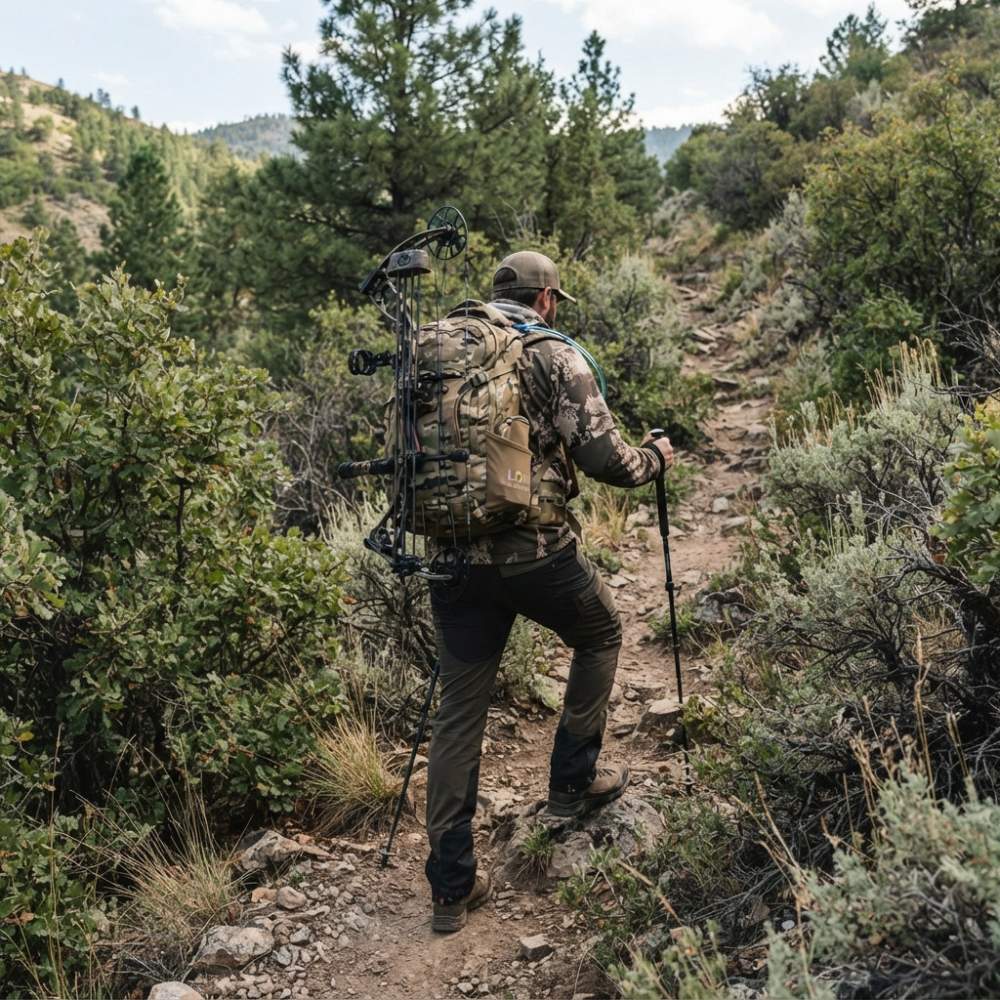
Practice before the season. Hike a loaded pack with the bow attached on a steep trail, then adjust the sling until nothing rattles or shifts. Small changes in strap tension can make a noticeable difference over several miles of climbing.
Price, Durability and Where Each System Fits Your Hunt
Pricing depends on the configuration you choose, so check LDH Outdoors directly for current prices.
Durability depends on materials, stitching and how you treat the gear, and reviews and field reports are the best guide. Our Backpack Bow Sling is hand-tied in Oregon and has a 4.5 star rating across 12 customer reviews. Ask yourself where you hunt. A system that suits a mild backcountry ridge may not suit brushy, steep country, and a protection-first accessory may suit a hunter who rides their bow in a vehicle more than one who hikes miles with it.
Choosing Your Bow Sling Before Your Next Backcountry Trip
Start with your bow's axle-to-axle length and your pack's attachment points. Then decide whether protection or hands-free carry matters more on your hunts. If you hike rugged ground with a lightweight pack, a simple sling that attaches to existing webbing is the most direct solution. If you want to see more options before deciding, browse our Bow Spider alternatives for backcountry hunting to compare what else fits your setup.
If you already run a bino harness, check whether the sling attaches to its webbing before you buy. You can browse the Backpack Bow Sling to see how it attaches and whether it suits your pack. For a deeper look at harness setups, our best bow sling for bino harness buying guide walks through the fit questions that matter most.
Frequently Asked Questions
What is the difference between Alpine Products and Bow Spider bow-carrying systems?
Both systems are built to hold a compound bow off your hands while you hike, but they differ in how they attach and what they are designed around. Check the product specifications for the exact fit of your bow and pack before buying, and confirm current pricing on the manufacturer's website.
How does the Bow Spider attach to a backpack?
Attachment depends on the specific product, so confirm the mounting method against the current listing before purchasing. Verify that your backpack has suitable webbing placement and that the bow's axle-to-axle length falls within the stated range.
Are Alpine Products bow holders compatible with compound bows?
Compatibility is the first thing to check. Many bow carry systems are sized for compound bows with parallel limbs within a specific axle-to-axle range, so a bow outside that range may not sit securely. Compare your bow's axle-to-axle length and limb design with the manufacturer's specifications for the Alpine Products model you are considering before ordering.
Can you carry a bow hands-free while hiking?
Yes. Hands-free carry systems attach the bow to a backpack or bino harness so your hands stay free for trekking poles, glassing and stalking. Secure the bow with the system's straps or hold, keep the sling snug so the bow does not swing when you scramble uphill, and test the setup on a short hike before a backcountry trip.
We recommend choosing based on your bow, your pack and the terrain you hunt, not on which name sounds more familiar. Get started with LDH Outdoors and carry your bow hands-free on your next rugged hunt.


