

Bow Hunting Stalking Gear Essentials: A 2026 Guide
Bow hunting stalking gear: Master spot-and-stalk bowhunting with essential gear, packing strategies, and lightweight equipment.

In this article
Last Updated: October 23, 2026
Quick Summary
Bow hunting stalking gear essentials include a quality mid-sized backpack (40-55 liters), hands-free bow carrying system like a bow sling, binoculars (8x42 or 10x42), rangefinder, and quiet clothing made from cotton or wool. These items keep your bow accessible, reduce fatigue, and maintain stealth during multi-mile stalks across varied terrain.
- A bow sling weighs ounces compared to 2-3 pounds for traditional bow cases while keeping hands free for trekking poles and binoculars.
- Quality binoculars and a solid hunting pack should be your first priority before adding specialized gear like rangefinders and bow slings.
- Metal hardware on packs creates noise in brush; use plastic buckles, soft loops, and fabric attachment points for stealth.
- Wind direction is your most important tactical tool; no gear compensates for moving upwind of game.
- Quiet fabrics like cotton and wool are essential; avoid rustling synthetics and loud zippers that carry through mountain air.
Table of Contents
- Why Gear Selection Matters for Spot-and-Stalk Bowhunting
- Essential Bow Hunting Backpack Setup
- Bowhunting Pack List: What to Carry
- Lightweight Bowhunting Gear Strategy
- Quiet Hunting Gear and Stealth Equipment
- Terrain-Specific Gear Selection
- Bow Stalking Tactics: Using Your Gear Effectively
- Frequently Asked Questions
Why Gear Selection Matters for Spot-and-Stalk Bowhunting
Spot-and-stalk bowhunting demands different bow hunting stalking gear than sitting in a tree stand.
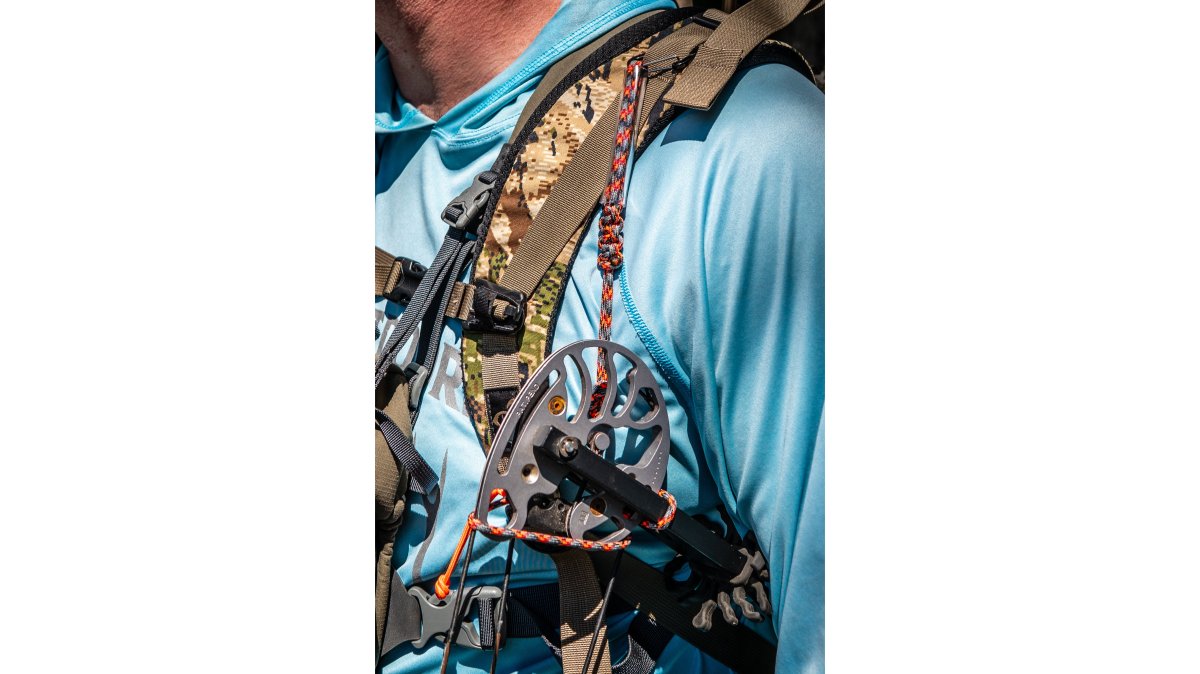
The challenge is carrying a compound bow across steep, brushy terrain without exhausting yourself before the stalk.

At LDH Outdoors, we've designed our Backpack Bow Sling specifically for this reality.
The difference between hunters who succeed and those who burn out: they've optimized their setup so gear works for them.
Essential Bow Hunting Backpack Setup
Your backpack is the foundation of every successful stalk. It carries optics, navigation gear, safety equipment, and layers for weather swings, all while keeping your bow accessible. The best approach combines a mid-sized hunting pack (40-55 liters) with dedicated attachment systems for hands-free bow carrying.
Hands-Free Bow Carrying Systems
A hands-free bow carrying system is non-negotiable for spot-and-stalk hunting. A quality bow sling attaches to your pack's webbing and holds your bow vertically, distributing weight naturally across your shoulders.
The LDH Outdoors Backpack Bow Sling ($29.95) exemplifies what works: hand-tied in Oregon, it attaches to any backpack or bino-harness webbing and works with most compound bows.
The key advantage of a bow sling over bow cases or frame-mounted carriers is simplicity and weight.
Pack Organization and Accessibility
Organization determines whether you spend your stalk frustrated or focused.
The best layout keeps your binoculars accessible without opening your pack. A bino harness worn over your pack straps lets you glass without slowing down.
Weight distribution matters. Heavy items (water, food, extra layers) should sit mid-pack and close to your back, with lighter items on top or in external pockets.
Bowhunting Pack List: What to Carry
A complete bowhunting pack list differs from general backpacking because your priority is optics and navigation, not comfort. Here's what goes in the pack:
Navigation and Optics
Binoculars are your primary tool. Quality glass (8x42 or 10x42) lets you spot game at distance. Pair it with a laser rangefinder to confirm yardage before committing to a stalk.
A map and compass (or GPS with offline maps) keep you oriented. Terrain looks different on the return hike. Carry a topographic map of your hunting area and know the key ridges, drainages, and approach routes before you leave camp.
Field Essentials and Safety Gear
A quality field knife cuts brush for a shooting lane, processes game, and handles emergency repairs. Choose a fixed blade 3-4 inches long.
A headlamp with red light preserves night vision and doesn't spook game like white light.
Bring more water than you think you need; exertion at elevation dehydrates fast. A 1-2 liter hydration bladder lets you drink without stopping, and energy bars fuel long glassing sessions.
Lightweight Bowhunting Gear Strategy
Lightweight gear doesn't mean cutting corners on quality. It means choosing equipment that does one job exceptionally well. A minimalist approach improves your success rate because you move faster, glass more, and fatigue less.
Weight vs. Functionality Trade-Offs
Every ounce slows you down. On a 10-mile day with 3,000 feet of elevation gain, an extra 10 pounds costs energy you could spend on the hunt.
Skip the bulky rain jacket if the forecast is clear; bring a lightweight emergency poncho. Skip the camping stove on day hunts; bring energy bars.
The bow sling exemplifies this principle. Traditional bow cases weigh 2-3 pounds. A quality bow sling weighs ounces and attaches to gear you're already carrying.
Budget-Tier Recommendations
If you're building your first spot-and-stalk setup, prioritize optics and a quality pack. A solid pair of 8x42 binoculars and a 40-liter hunting pack form the foundation.
For budget-conscious hunters, the LDH Outdoors Backpack Bow Sling at $29.95 is hand-tied, durable, and simple enough that nothing breaks in the field. Spend your budget on glass and a pack; the bow sling does one thing, hold your bow securely and quietly.
Quiet Hunting Gear and Stealth Equipment
Noise is the enemy of spot-and-stalk hunting. Your footsteps, your pack, your metal hardware, everything carries through quiet mountain air. Stealth gear reduces noise and keeps you undetected as you approach.
Silent Clothing and Camouflage
Camouflage pattern matters less than you'd think; breaking up your outline and moving slowly matters more. Quiet fabric is the priority.
Layering is essential because you'll sweat on the approach and cool down while glassing.
Your face and hands are visible from distance. A quiet balaclava breaks up your outline, and gloves keep hands warm and reduce glare.
Noise-Free Hardware and Attachment Systems
Metal hardware on your pack creates noise in brush; plastic buckles, soft loops, and fabric attachment points are quieter. When you attach your bow sling, secure every connection point.
Your binocular harness should hold binoculars close so they don't swing and create noise, and your rangefinder pouch needs a secure strap that doesn't flap. Position every piece of gear so movement doesn't create friction or noise.
Terrain-Specific Gear Selection
Different terrain demands different equipment priorities. A high-altitude alpine stalk requires different gear than hunting brushy foothills.
Alpine and High-Elevation Hunting
Alpine terrain is exposed and windy. You need a wind-resistant outer shell and extra layers for extreme temperature swings. Binoculars are your primary tool for glassing from ridges, and a rangefinder confirms distance where deceiving terrain can make 200 yards look like 400.
Footwear matters enormously. Choose boots with good ankle support and aggressive tread for steep, rocky slopes. Gaiters keep rocks and snow out, and trekking poles reduce knee strain on descents and add stability on loose terrain.
Brushy and Dense Cover Terrain
Brushy terrain requires quiet movement and close-range shots. Binoculars are less useful because you can't see far, but your rangefinder is critical because brush makes distance judgment difficult.
Brush also means your bow needs to be positioned for quick access. A bow sling that keeps your bow vertical and ready is more valuable in thick cover than in open country.
Bow Stalking Tactics: Using Your Gear Effectively
Gear is only useful if you can deploy it during the stalk. The best equipment fails without a system for accessing it quickly and quietly.
Quick-Release Access During Movement
Your bow should be accessible without removing your pack. When you spot a deer, you need to transition from walking to shooting position in seconds.
Practice this transition at home. Know exactly how to release your bow from the sling, where your release aid is, and how to nock an arrow without looking down.
Your binoculars should be accessible for quick glassing during the stalk. A bino harness keeps them ready without opening your pack.
Scent Control and Wind Awareness
Wind direction is your most important tactical tool. No gear compensates for moving upwind of game.
Scent control gear (spray, activated charcoal clothing) helps, but wind direction is the foundation.
Stay downwind of where you expect to find game. If wind shifts during your stalk, abort and reposition. A successful stalk requires patience and discipline to move only when the wind is right.
Spot-and-stalk bowhunting rewards preparation and intentional gear selection. The LDH Outdoors Backpack Bow Sling ($29.95) is hand-tied in Oregon, attaches to any backpack or bino-harness webbing, and delivers instant bow access when you need it.
Frequently Asked Questions
What are the essential gear needs for bow hunting?
Core essentials for bow hunting include your compound bow, arrows with broadheads, a release aid, binoculars for glassing, a rangefinder for distance estimation, a hunting backpack with bow carrying system, quiet clothing and camouflage, stalking footwear, a bino harness or pack with gear organization, a field knife, navigation tools (maps or GPS), and a headlamp. The specific combination depends on your terrain and hunting style, but these items form the foundation for safe, effective spot-and-stalk bowhunting.
How do you carry a bow hands-free while stalking?
A bow sling attached to your backpack or bino harness lets you carry your bow vertically while keeping your hands free for hiking, glassing, and climbing. The LDH Outdoors Backpack Bow Sling ($29.95) attaches to existing webbing on most packs and compound bows. Hang your bow vertical, pull the sling under the limb and over the cam, then let the bow's weight cinch the sling. When you're ready to shoot, lift the bow's weight and pull the release cord, the bow falls free instantly. This system is hand-tied and weighs significantly less than rigid carriers.
What should you pack for a day of mountain bowhunting?
Pack your bow with a hands-free sling, binoculars in a bino harness, a rangefinder in a rangefinder pouch, layered quiet clothing suited to weather, stalking boots with good grip, arrows in a quiver secured to your pack, a field knife, a headlamp with extra batteries, water and high-calorie snacks, a map and compass or GPS, a small first-aid kit, and wind-checking powder or scent control products. Organize everything in a lightweight backpack with accessible pockets. Prioritize items by frequency of use, optics and bow should be quickest to deploy, while emergency gear can go deeper in the pack.
How can you keep hunting gear quiet while stalking?
Quiet gear is essential for spot-and-stalk success. Choose clothing with quiet face fabric (brushed or fleece materials) rather than stiff synthetics that rustle. Minimize metal hardware by using plastic or rubber attachment points where possible. Use a bino harness and rangefinder pouch made from soft materials to prevent rattling. Secure all gear tightly so nothing shifts or clanks as you move. The LDH Outdoors Backpack Bow Sling uses hand-tied construction with minimal hardware. Test your entire setup before the hunt by walking through brush to identify squeaks or clinks.
How do you choose a lightweight bowhunting backpack?
Prioritize packs under 3 pounds empty weight with a frame designed for backcountry hunting. Look for built-in webbing for attaching a bow sling and bino harness, multiple zippered pockets for gear organization, and a frame that distributes weight to your hips rather than shoulders. Choose materials like ripstop nylon or Dyneema that resist tears in brush while staying light. Ensure the pack fits your body type and shoulder width, women hunters should look for packs with shorter torso lengths and narrower shoulder straps. Test the pack with a full load on steep terrain before committing to a multi-day hunt.
What's the difference between a bow sling and a bow case?
A bow sling (like the LDH Outdoors model at $29.95) is a lightweight, hands-free carrying system that attaches to your existing pack webbing, letting you keep your bow accessible during the stalk. A bow case is a rigid container designed for transport and storage, offering maximum protection but weighing significantly more and keeping your bow inaccessible in the field. For spot-and-stalk hunting, a sling is superior because it lets you glass, hike, and deploy your bow quickly without removing a case. Cases are better for vehicle transport or storage at camp.
Can I use a bow sling with a bino harness?
Yes. The LDH Outdoors Backpack Bow Sling attaches to most backpacks and bino-harness webbing, so you can integrate it seamlessly with your existing optics setup. This creates a unified, lightweight gear organization system where your bow and binoculars are both hands-free and quickly accessible. Verify that your bino harness has webbing loops compatible with the sling attachment before purchasing. This combination is ideal for hunters who want to minimize pack weight while keeping critical optics and bow within instant reach.
What terrain factors should influence my gear choices?
Alpine and high-elevation terrain demands lightweight gear to reduce fatigue on long climbs and steep descents; prioritize ultralight packs and minimal hardware. Brushy, dense cover requires quiet clothing with soft face fabric and secure gear organization to prevent snagging or rattling. Open terrain with long glassing distances benefits from premium binoculars and rangefinders. Wet or muddy conditions call for weather-resistant materials and quick-drying fabrics. Always select stalking footwear with grip suitable to your terrain, rocky slopes need different sole patterns than loose scree. Assess your primary hunting environment and build your pack list around those specific conditions.


