

Quick Release Bow Sling Benefits for Backcountry Hunters
Quick release bow sling benefits include hands-free carry, instant bow removal, and less arm fatigue on the trail. See how to attach one to your pack.

In this article
Table of Contents
- Why Quick Release Bow Sling Benefits Matter on the Trail
- How to Attach a Bow to a Backpack in Four Steps
- What Separates a Backpack Bow Sling From a Release Aid Holder
- Quick Release Bow Sling vs Carrying by Hand: Field Comparison
- Durability, Weather, and Fit: What to Check Before You Buy
- Safety and Bow Control: What No Sling Can Do for You
- Frequently Asked Questions
Last Updated: October 14, 2026
Why Quick Release Bow Sling Benefits Matter on the Trail
A quick release bow sling benefits any hunter who has ever needed both hands free on a steep climb. The sling holds your bow against your pack, and one pull frees it. That matters when a bull steps out 40 yards away and you have seconds, not minutes.
At LDH Outdoors, we build gear for exactly that moment. Our Backpack Bow Sling weighs almost nothing and attaches to the webbing you already carry. No new harness. No bulky hardware.
Here is the core problem. Carrying a compound bow by hand for miles is miserable. Your grip fatigues, the riser digs into your palm, and you have one hand tied up all day. A sling fixes the carry problem, but only if you can get the bow off fast.
That is where the quick release design earns its keep. Below, we break down how to attach a bow to a backpack, how a sling differs from a release aid holder, and what to check before you buy.
How to Attach a Bow to a Backpack in Four Steps
Attaching a bow to a backpack takes about a minute once you know the sequence. The sling cinches under the weight of the bow itself, so there is nothing to buckle or tie in the field.
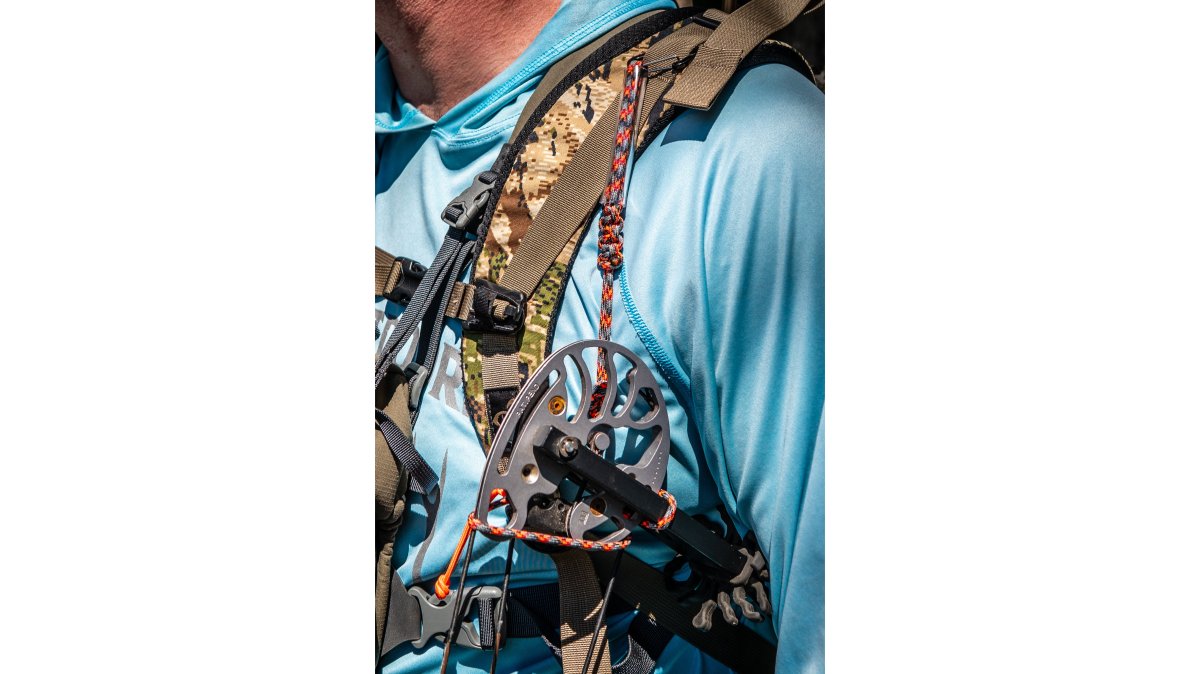
Here is how we would do it:

- Clip in at the attachment point. Thread the sling through your backpack or bino harness webbing.
- Hang the bow vertical. Let it dangle so the weight settles downward.
- Pull the sling under the limb and over the cam. Point the release cord back toward yourself.
- Let the bow hang. The weight pulls tension on the sling and cinches it on the cam.
To release, lift the bow's weight off the sling and pull the release cord back over the cam. The bow falls free.
Choosing the Right Attachment Point
Pick a spot on your pack's webbing that sits high and close to your spine. That keeps the bow from swinging as you walk. A guide to safe load placement from the National Institute for Occupational Safety and Health notes that keeping weight close to the body's center reduces strain during long carries. Look for a strap that will not shift when you scramble.
What Separates a Backpack Bow Sling From a Release Aid Holder
A backpack bow sling carries your bow. A release aid holder carries your release. Hunters mix these up constantly, and the confusion leads to buying the wrong gear.
A bow sling is a strap system that secures the bow itself to your pack or harness. A release aid is the trigger device you wear on your wrist or hand to fire the bow. A release aid holder just keeps that trigger within reach.
They solve two different problems:
| Gear | What It Holds | Where It Mounts | Main Job |
|---|---|---|---|
| Bow sling | The bow | Pack or bino harness webbing | Hands-free carry |
| Release aid holder | The release trigger | Wrist or harness strap | Keep the trigger accessible |
| Wrist-strap release | The trigger | Your wrist | Fire the bow cleanly |
| Thumb-button release | The trigger | Your hand | Precise, repeatable shots |
If you want both hands free while your bow rides on your back, you want a sling. If your release keeps slipping out of reach, you want a holder.
Quick Release Bow Sling vs Carrying by Hand: Field Comparison
Carrying by hand wins on speed. A sling wins on everything else. The trade-off comes down to how far you walk, what the terrain does under your feet, and how often you need your bow ready. Break the decision down by situation instead of by preference.
Hiking on established trail. Hand-carry is fine for the first mile. Past that, a 4- to 5-pound compound held at the riser loads one shoulder and forearm continuously, and most hunters start shifting the bow between hands or resting it on a shoulder. A sling moves that load to your pack's frame and shoulder straps, which are already engineered to carry weight. Trekking poles stay in both hands, which matters on downhill sections where a stumble is most likely.
Climbing and scrambling. This is where hand-carry loses outright. On a steep pitch you need both hands for rock, roots, or a trekking pole planted above you. A bow in one hand forces you to choose between balance and control. A sling keeps the bow tight against your pack so it does not pendulum, and your hands stay free.
Hunting and stalking. Hand-carry keeps the bow in your front hand and ready to draw in one motion. A sling adds a release step: lift the bow's weight off the sling, pull the cord back over the cam, and bring the bow up. In practice that is a one- to two-second motion, but it is a motion you must rehearse.
Backpack attachment. Some hunters skip the sling and strap the bow directly to the pack with compression straps or a dedicated bow bucket. That is secure and hands-free, but removal is slow, you are unbuckling or unclipping, not pulling a cord. A quick-release sling sits between the two: faster than pack straps, more secure than a bare hand.
Here is the honest comparison:
- Hand carry: fastest to shoot, but tiring over miles, awkward on scrambles, and ties up one hand all day.
- Sling carry: hands-free, secure, and fast to release, but adds one rehearsed motion before you shoot.
- Chest or hip carry: quick access, but the bow swings, catches on brush, and can interfere with a pack's waist belt.
- Pack straps or bow bucket: very secure, but the slowest to deploy and the hardest to reach while wearing the pack.
A common pattern among backcountry hunters is to run a sling for the approach and switch to hand-carry once they are inside shooting distance. That gets the carry relief on the miles and the speed where it counts. Decide based on your terrain, not on which option sounds tougher.
Durability, Weather, and Fit: What to Check Before You Buy
Durability and fit decide whether a sling lasts one season or ten. Check construction, materials, weather behavior, and measurable fit before you buy, and check them against your specific bow, not against a product photo.
Construction. Look at how the sling is joined, not just what it is made of. Hand-tied knots at load points hold up better than glued or molded joints, because a sling's failure mode is almost always at the connection, not in the middle of the strap. Check that the release cord is a single continuous piece rather than a spliced loop. Fewer connection points means fewer things to fail.
Materials and weather. Cold also stiffens release cords, a cord that pulls smoothly at 60 degrees may need a harder tug at 20, so test it in the conditions you actually hunt.
Noise. A sling that clinks, squeaks, or slaps against a pack defeats the purpose on a stalk. Look for covered or coated hardware, and trim or tuck any loose cord tail so it cannot swing against the pack.
Measurable fit. Before you buy, measure three things:
- Bow length, axle to axle. A sling sized for a 28-inch bow may not cinch correctly on a 34-inch bow, because the cam position changes where the strap lands.
- Strap adjustment range. The sling should adjust to your torso with the buckle sitting off your shoulder blade, not on it. If the strap bottoms out at its shortest setting on your frame, it is the wrong size.
- Attachment clearance. Confirm the sling's attachment point on your pack or bino harness webbing does not interfere with your waist belt, your release hand, or a chest-mounted rangefinder. Mock it up with the pack loaded, not empty.
Compatibility checks. Confirm the sling's attachment method matches your pack's webbing width. Check that the release cord length lets you reach it with either hand while wearing gloves. And verify the sling does not contact the string, cables, or cams when the bow hangs, since contact there can cause wear or a nock-off.
Maintenance. Rinse and air-dry after wet hunts, inspect stitching and cord for fraying before each season, and replace the sling at the first sign of a compromised load point. A sling is cheap relative to the bow it holds.
Safety and Bow Control: What No Sling Can Do for You
No sling can guarantee your bow stays secured in every condition. That is not a knock on slings. It is the truth every hunter should hear before trusting any carry system.
A sling helps you carry. It does not replace awareness. You still need to watch your bow when you climb, cross deadfall, or move through tight timber.
Follow a few rules and you will be fine:
- Inspect straps, stitching, buckles, and attachment points before every use.
- Confirm the bow is secure before you walk or climb.
- Keep adjustments tight and properly positioned.
- Replace the product if any part shows wear or damage.
Safety gear guidance from the U.S. Consumer Product Safety Commission stresses inspecting equipment before use and replacing worn components. The same logic applies to your sling. Treat it like any other piece of life-safety gear.
The user is always responsible for proper setup and safe use. A sling is a tool, not a guarantee.
Frequently Asked Questions
What are the benefits of a quick release bow sling?
A quick release bow sling keeps your hands free for glassing, scrambling, or using trekking poles while your bow rides securely against your pack. When an animal appears, you lift the bow's weight off the sling and pull the release cord over the cam, and the bow drops free in seconds. That instant removal matters most during spot-and-stalk hunting, when seconds of fumbling can cost you a shot opportunity.
How do you attach a compound bow to a backpack?
Run the sling through the webbing on your backpack or bino harness, then hang the bow vertically. Pull the sling under the limb and over the cam with the release cord pointed back toward you. Let the bow hang so its weight pulls tension on the sling, which cinches it against the cam. Confirm every adjustment is tight before you start walking, and re-inspect the attachment point periodically through the day.
Is a backpack bow sling better than carrying a bow by hand?
For long approaches and steep terrain, yes. Carrying a bow by hand through brush tires your grip and leaves you without hands for navigation or glassing. A sling moves that load onto your pack's frame, where it rides closer to your center of gravity. The tradeoff is that you must stay aware of the bow while climbing or crossing obstacles, since no carrying system keeps equipment secured under every condition.
How quickly can you remove a bow from a backpack sling?
With a cord-and-cam design, removal takes one motion: lift the bow's weight off the sling and pull the release cord over the cam. The bow falls free immediately, with no buckle to unclip or strap to unthread. Practice the motion at home with an unloaded bow before your hunt so the movement is automatic when you need it.
The backcountry does not forgive loose gear or slow hands. If you want a secure, hands-free carry that frees your bow in one motion, our Backpack Bow Sling is built for it. It is the lightest and simplest sling we make, hand tied in Oregon, and it attaches to most backpacks and compound bows. It carries a 4.5 star rating from 12 customer reviews. Get started with LDH Outdoors and keep both hands free on your next hunt.


