

7 Essential Bow Hunting Gear Items for Women
Essential bow hunting gear for women includes archery equipment and apparel. Learn what 7 items beginners and experienced hunters need to succeed.

In this article
Last Updated: October 26, 2026
Quick Summary
Bow hunting gear for women is designed specifically for female anatomy and the draw cycle, featuring articulated sleeves, tailored layering, and properly fitted bows that prevent string catch and maintain accuracy. Essential items include a professionally fitted bow, women-specific clothing layers, lightweight boots, matched arrows, and a reliable bow sling for hands-free carrying.
- Women bowhunters increased 60 percent from 2004 to 2009, growing from 500,000 to 800,000 participants.
- Draw length must be measured professionally at a pro shop, as arm-span formulas are only a starting point.
- Most women hunt comfortably with 40 to 50 pounds draw weight, which feels like 7 to 13 pounds at full draw with modern high let-off bows.
- Lightweight backcountry hunting boots weigh about 3.5 pounds per pair, far lighter than traditional boots.
- The Backpack Bow Sling costs $29.95 and is hand-tied in Oregon for quick-release deployment.
Table of Contents
- Why Women Need Specialized Bow Hunting Gear
- Essential Women's Hunting Clothes for the Field
- Women's Hunting Boots: Lightweight Footwear for Backcountry Terrain
- Women's Archery Gear: Bows, Arrows, and Accessories
- Hands-Free Bow Carrying: The Compound Bow Sling Advantage
- Gear Comparison: Budget and Performance Trade-Offs
- Building Your Women's Bow Hunting Setup
- Frequently Asked Questions
Why Women Need Specialized Bow Hunting Gear
The female bowhunter population has grown dramatically: from 2004 to 2009, women bowhunters increased from 500,000 to 800,000, a 60 percent jump (National Sporting Goods Association, 2009).
Standard hunting apparel often has snaps, storm flaps, or bulk that catches the bowstring during the draw, hurting accuracy.
At LDH Outdoors, we know bow hunting gear for women requires thoughtful engineering, rethinking how gear integrates with your body, your bow, and your setup.
Essential Women's Hunting Clothes for the Field
Start with tight-fitting base layers that wick moisture and avoid bulk under your arms.
The outer layer matters most.
Layering changes by season: early season may need only a base layer and light mid-layer, while late season demands heavier insulation.
You can browse the full Outdoor & Hunting collection to see how modern women's hunting clothes integrate technical features with practical design.
Women's Hunting Boots: Lightweight Footwear for Backcountry Terrain
Women's hunting boots designed for backcountry work prioritize lightweight construction and ankle support over maximum insulation.
Look for boots with:
- Waterproof membranes that keep your feet dry without adding weight
- Aggressive outsoles for grip on loose rock and steep slopes
- Ankle support that prevents rolling on uneven terrain
Break in your boots well before season, many experienced hunters recommend day hikes for at least two weeks before opening day.
Fit matters more than brand. Women's feet are typically narrower than men's, and women-specific boots provide better heel hold and more natural arch support.
Women's Archery Gear: Bows, Arrows, and Accessories
Most gear guides stop at clothing. But the keyword is bow hunting gear for women, and the bow is where fit matters most. A bow that fights your body costs accuracy on every shot; one that fits lets you hold steady at full draw without fatigue.
Women-Specific Bow Fit: The Five Numbers That Matter
Five specifications determine whether a bow works for you. Get them right and everything downstream, arrows, sight, release, form, gets easier.
- Draw length. Measured in inches, usually from the nock point to the grip pivot plus 1.75 inches. Too long forces you to lean back and overreach; too short and you crowd the string and lose back tension. Have it measured at a pro shop, arm-span formulas are a starting point, not a substitute for a fitting.
- Draw weight. The force needed to pull the string to the wall. Many states set a minimum draw weight for big-game hunting (commonly 35 to 40 pounds for deer, higher for elk), so check your state wildlife agency's regulations before buying. For most women, a comfortable hunting weight is one you can draw smoothly from a seated position, cold, without muscling it, often 40 to 50 pounds. Modern compound bows with high let-off (typically 70 to 85 percent) hold most of that weight at full draw, so a 45-pound bow may feel like 7 to 13 pounds in your hand.
- Bow weight (mass). The physical weight of the bare bow, usually 3 to 4.5 pounds for a women's compound. Lighter bows are easier to carry but harder to hold steady; heavier bows stabilize but fatigue you on long stalks. Balance matters more than raw weight, a well-balanced 4-pound bow feels steadier than a nose-heavy 3-pound bow.
Before buying any bow, draw it in person wearing the release you plan to hunt with. A bow that feels fine with a shop loaner release can feel completely different with your own.
Arrows: Match the Spine, Don't Guess
Arrow spine is the shaft's stiffness, and it must match your bow's draw weight and your draw length. Too weak and it flies erratically; too stiff and it can hit the riser on release. Use manufacturers' spine charts, and when between two spines, most bow technicians recommend the stiffer option for hunting. Arrow length should extend roughly an inch past your rest at full draw.
Accessories That Earn Their Place
- Bow sight. A multi-pin sight lets you set pins for 20, 30, 40 yards and beyond. Fiber-optic pins gather light for low-light shots. Single-pin sliders offer precision at known distances but require more practice to range and adjust.
- Quiver. A bow-mounted quiver keeps arrows with the bow but adds weight and can affect balance; a hip or back quiver keeps the bow light and is quieter in brush. Most backcountry hunters prefer a detachable quiver they can leave at the tree.
- Arm guard. Protects the forearm from string slap and, more importantly, trains you to keep your bow arm relaxed instead of flinching.
Broadheads: The Pointy End of the Setup
Broadheads must match your arrow weight and tune. Fixed-blade heads are simple and reliable; mechanical heads fly more like field points but add moving parts. Our DOUBLE BEVEL 125 broadheads feature single-piece hardened steel construction and weigh 125 grains, delivering consistent flight and penetration. For hunters pursuing larger game or tougher conditions, the SINGLE BEVEL XL 150 at $84.99 provides additional weight and cutting diameter.

Always verify your state's minimum draw weight, arrow requirements, and broadhead regulations before hunting season. Rules vary by state and by species.
Practice With the Setup You Hunt With
A bow that fits is only half the equation. Shoot your complete hunting setup, bow, arrows, broadheads, release, and full clothing layers, at least a few weeks before opening day. If your string catches a jacket seam or your release snags a cuff, discover it at the range, not in a treestand.
Hands-Free Bow Carrying: The Compound Bow Sling Advantage
Carrying your bow matters as much as shooting it.
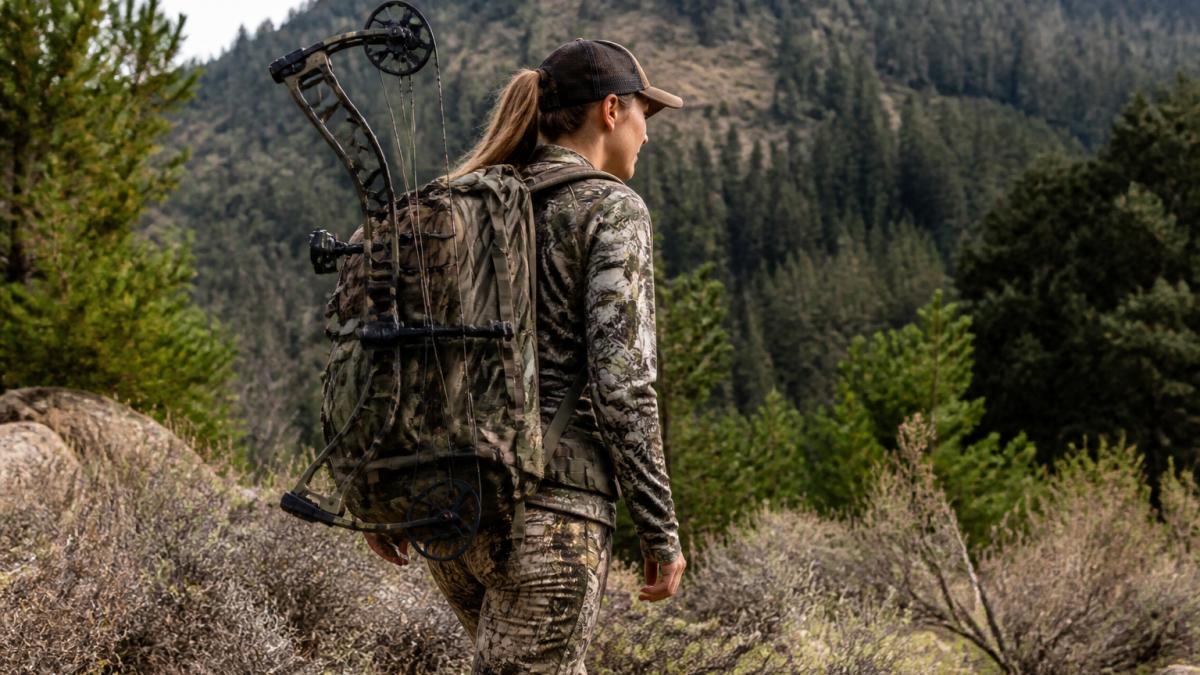
The best bow sling for backcountry hunting is lightweight, simple, and reliable.
Our Backpack Bow Sling at $29.95 is hand-tied in Oregon and designed specifically for this purpose.

Watch out: Before every use, inspect all straps, stitching, and attachment points.
You can dive deeper into lightweight bow sling options and backcountry gear selection to understand how different carrying systems compare.
Gear Comparison: Budget and Performance Trade-Offs
Every gear guide tells you to "balance performance and budget." Almost none tell you where the money actually buys performance. This section does, with a prioritized starter checklist and transparent tier guidance so you can spend deliberately.
The Prioritized Starter Checklist
Organize your purchases into three buckets. Buy essentials first; add optional items as your hunting style demands; upgrade only when you've outgrown what you have.
Essentials (buy first, in this order):
- A properly fitted bow. Nothing else matters if the bow doesn't fit. Budget for a pro-shop fitting, not just the bow.
- Matched arrows. Spine-correct arrows with field points for practice and broadheads for hunting.
- Release aid. Matched to your hand size and anchor point.
- Bow sight and peep. A basic multi-pin sight is enough to start.
- Women-specific base and mid layers. Moisture-wicking, articulated sleeves, no bulk at the string.
- Lightweight, broken-in boots. Fit and break-in matter more than brand.
- A bow sling or carrying system. Hands-free carry is a safety and stamina issue on backcountry hunts.
Optional (add as your style demands):
- Hip or back quiver if you prefer a lighter bow
- Wrist sling and arm guard for form consistency
- Rangefinder for unknown-distance setups
- Treestand harness and safety line if you hunt elevated
Upgrades (only after you've outgrown the essentials):
- Custom-fitted bow or premium sight
- Single-pin slider sight
- Premium broadheads for larger game or tougher conditions
- Technical outerwear with advanced insulation and quiet fabrics
What Each Tier Actually Buys
| Gear Category | Entry Level | Mid-Range | Premium |
|---|---|---|---|
| Bow | Used or entry compound, basic accessories | New women's compound with fitted draw length and weight | Custom-fitted flagship bow with premium sight and rest |
| Arrows | Stock spine-matched shafts | Custom-cut, spine-tuned shafts | Premium matched sets with high-end broadheads |
| Clothing | Basic camo in women's cut | Technical base/mid layers with articulated sleeves | High-performance insulation and quiet, weather-resistant outerwear |
| Boots | Standard hunting boots | Lightweight backcountry boots (~$210) | Premium lightweight with aggressive tread and better ankle support |
| Bow Sling | Generic rifle sling | Bow-specific sling ($29.95) | Premium hand-tied sling with quick-release |
| Broadheads | Budget steel heads | Mid-range fixed blades ($69.99-$74.99) | Premium broadheads ($84.99) |
The biggest performance gains come from fit and specificity, not price. A properly fitted bow matters more than the most expensive bow on the market.
Where to Spend and Where to Save
- Spend on fit. A pro-shop bow fitting and a release that matches your hand cost little relative to the bow and pay off on every shot.
- Spend on boots and layers. These are the gear that keeps you in the field longer and quieter.
- Save on your first sight and quiver. Basic versions work fine while you learn; upgrade once you know what you actually want.
- Don't over-buy broadheads before you tune. Buy one pack, confirm they fly with your setup, then stock up.
Start with the essentials: a properly fitted bow, matched arrows, women-specific hunting clothes, lightweight boots, and a reliable bow sling. Add premium components as your experience grows and your budget allows.
Building Your Women's Bow Hunting Setup
A complete setup integrates multiple pieces into a cohesive system. Here's how to assemble yours:
Start with the bow. Have your draw length measured professionally, your bow must fit your body, not the other way around. This affects arrow selection, sight adjustment, and how you carry the bow.
Select boots that match your terrain. Backcountry hunting demands lightweight boots with aggressive tread.
Choose broadheads that match your bow. Verify weight, spine, and thread pattern match your setup exactly. Our SINGLE BEVEL 125 at $74.99 provides reliable performance for most hunting scenarios, while the SINGLE BEVEL XL 150 at $84.99 offers additional penetration for tougher conditions.

Practice before hunting. Shoot your complete setup, bow, arrows, broadheads, and full hunting clothes, before opening day.
peer-support networks and gear libraries that increase women's participation in hunting
You can learn practical organization tips for your new hunting backpack setup in our guide on how to organize a hunting backpack.
Women's bow hunting gear has evolved beyond generic sizing adjustments.
Frequently Asked Questions
What is the most important bow hunting gear for women beginners?
Start with a properly fitted compound bow matched to your draw length and draw weight, a reliable release aid, and a bow sight. Add a quiver for arrows, arm guard, and a quality bow sling like the LDH Outdoors Backpack Bow Sling ($29.95) for hands-free carrying. Women-specific apparel with reduced bulk in the front prevents interference with your bowstring during the draw cycle. Peer-support networks and gear libraries are essential tools to support your participation in hunting, according to the USDA Forest Service.
How do women's hunting clothes differ from standard hunting apparel?
Women's hunting clothes are designed with less bulk in the front to prevent interference with the bowstring during your draw cycle. Modern gear prioritizes radial arm movement, specific layering systems, and weather protection tailored for female anatomy. Standard hunting apparel often features snaps, storm flaps, or excess bulk that can negatively impact your shot process and accuracy.
What weight and features should I look for in women's hunting boots?
Performance hunting boots designed for women typically weigh 3.5 pounds per pair, balancing support with lightweight comfort for long backcountry hikes. Look for boots with ankle support, durable soles for steep terrain, and water-resistant materials to handle variable field conditions. Proper fit is critical, women-specific sizing ensures comfort during the physical demands of bow hunting.
How does a compound bow sling improve my hunting experience?
A compound bow sling like the LDH Outdoors Backpack Bow Sling ($29.95) attaches to your existing backpack or binocular harness, allowing you to carry your bow hands-free while hiking and glassing. This hands-free solution enables quick bow release when you spot game and need to transition from observation to stalking. Hand-tied in Oregon, the sling is the lightest and simplest option on the market, easily attaching to most backpacks and compound bows. It cinches securely on your bow's cam using the weight of your bow itself, eliminating the need for constant adjustment.


